A campus ambassador program puts a trained student inside a college to represent a brand for a semester or a year. Students hear about these programs from Unstop, Internshala and their seniors; brands hear about them from agencies and from the Google, Microsoft and realme programs that made the format famous. This guide covers both sides, because programs only work when the student’s reasons and the brand’s reasons line up.
What a campus ambassador actually does
Despite the job title, an ambassador is not a salesperson. In a well-run program the role has four parts: presence (small activations, stalls at society events, product demos in hostels), distribution (sharing offers and sign-up links in class groups, society groups and college pages), content (reels, stories and photos from real campus moments) and feedback (what students said, what did not land, which colleges are warm). Each part is a mission with a deadline and a reward.
What students get
Programs pay in some combination of stipend, performance incentives, certificates, merchandise, early access and internship or placement consideration. The honest answer to “are campus ambassador programs paid?” is: the good ones are, at least per mission, and the best ones lead somewhere. Students should ask what the missions are, how performance is measured, what the rewards are in rupees and whether the brand actually hires from the program. Time commitment is usually 3 to 6 hours a week, more around launches and fests.
What brands get
A trained, distributed field force that already belongs to the audience. Ambassadors open colleges an outside team cannot, carry a launch into groups an ad cannot enter, and produce content that looks like the feed because it is the feed. Run across 50 colleges, a program delivers reach, trial and sign-ups at a unit cost that paid media struggles to match, and it compounds: the same ambassadors can carry three or four campaigns a year.
How a program is run
Recruit. Through society networks, college pages, existing ambassador communities and platforms such as Unstop. Screen. For reach inside the college (society heads, hostel reps, people who run things), reliability and fit, not just follower counts. Onboard. Brand training, a mission calendar, a reporting channel and clear rewards. Activate. Missions released in waves around the campus calendar: admissions, fests, exams, placements. Track. Mission completion, referral codes, content links and feedback, in one dashboard. Reward. On time, transparently, with recognition for the top performers.
The programs that fail skip screening (so the ambassadors have no real reach), skip onboarding (so the content is off-brand) or skip tracking (so nobody can tell what worked).
Which brands run strong programs
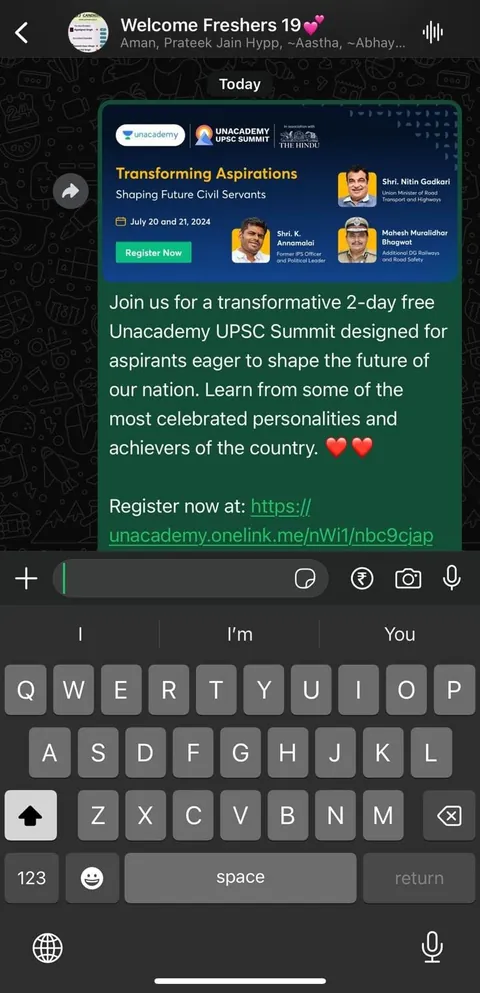
Google’s and Microsoft’s student ambassador programs set the template: real training, real community, real career value. In India, realme, iQOO, Unstop, HCLTech, MyGov and the IIT E-Cells run large programs with clear missions and rewards. Among the brands Youthfluence has worked with, Unacademy, Pee Safe, Motorola and EatSure used ambassador networks to deliver registrations, samples, hands-on experiences and sign-ups at scale.
What a program costs
For a brand, the cost is stipends and incentives, merchandise and samples, onboarding and management, and the technology to track it. A pilot across 10 to 20 colleges typically starts around ₹2 to 3 lakh a semester; a 50-college program runs ₹5 to 15 lakh; national programs across hundreds of colleges run higher. The unit metric to watch is cost per mission outcome: per referral, per sample, per piece of content, per registration.
How brands and students find each other
Students: Unstop, Internshala, college placement cells, society seniors and the brands’ own program pages. Brands: an agency with an existing ambassador network, which removes the recruitment and screening work; Youthfluence’s network holds 100K+ ambassadors across 10,000+ colleges and 200+ cities, and students can join through the students and creators page.
Questions people ask
Are campus ambassador programs paid? The good ones pay per mission or per month, plus incentives; some offer certificates and merchandise only. Ask before you apply.
Can first-year students apply? Usually yes. Many brands prefer first and second years because they stay in the program longer.
How long does a program run? A semester to a year. Launch programs can be shorter.
What does a brand need to start? A goal, a target college list or city list, a budget band and a decision on rewards. The plan and recruitment take about two weeks.
A campus ambassador program is a relationship, not a campaign. Brands that treat ambassadors as colleagues, pay on time and give them missions worth doing get a field force that no media plan can buy.